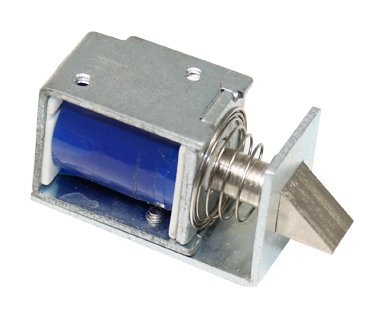
Car-park barriers and bollards, station ticket gates and turnstiles, ticket and parcel boxes, EV charging-pile connector locks and access barriers. Outdoor units face rain, dust, temperature swing and rough handling, so the build must fail safe and stay serviceable in the field.
| Environment | Sealed coil and IP-rated enclosure, −20 to +70 °C |
|---|---|
| Duty | Bursts at peak hours, long idle periods between |
| Cycle life | Up to 1M operations for gates and barriers |
| Typical choice | Tubular or sealed push-pull solenoid |
These are the ranges that come up most often in enquiries for this application. They are a starting point for discussion, not a specification — the numbers that matter are the ones from your mechanism.
Doubling the force in the same envelope usually means a larger coil and more heat. If the space is fixed, the honest answer is sometimes a different mechanism.
A faster actuation is louder. End-stop damping, a softer return spring or a reduced drive voltage all trade response time for acoustic performance.
Bearing surfaces, plunger coating and spring quality set the life. These are the first things a low-cost quote removes.
A feedback switch adds cost and a wire, but tells the controller the bolt actually moved. Without it, "locked" is an assumption.
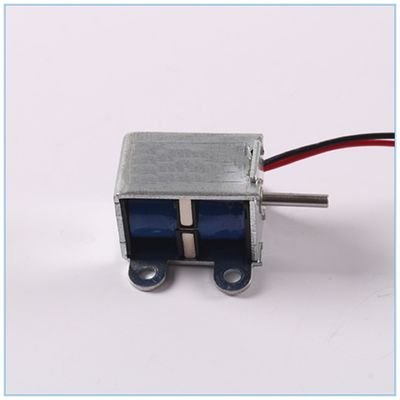
Automotive Push-Pull Solenoid
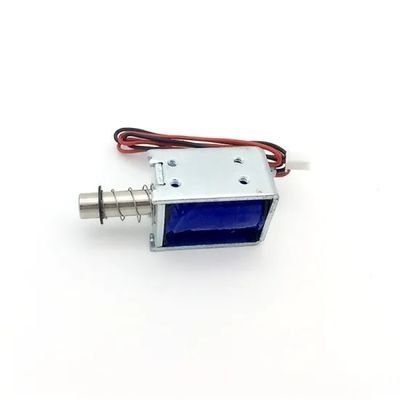
15 mm Tubular Solenoid, 40 mm Body
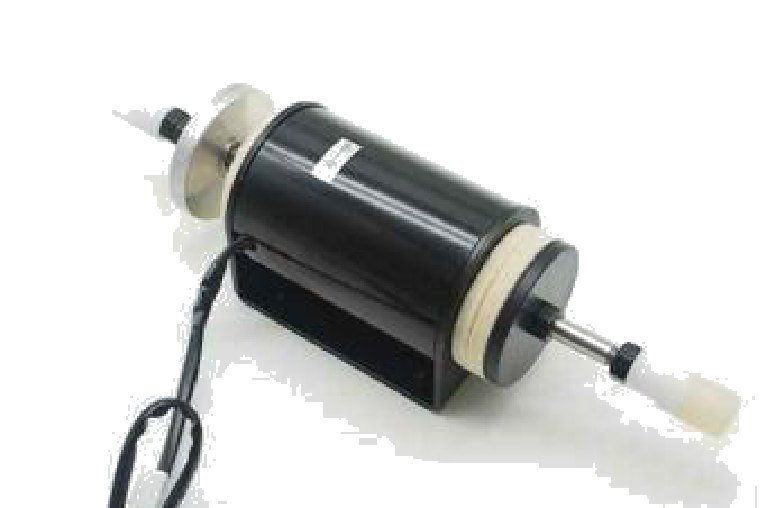
64 mm Tubular Solenoid, 90 mm Body
Enough to clear the strike plate under load, plus 1–2 mm of margin. Most cabinet and locker bolts land between 5 and 12 mm; electronic deadbolts are often 3–8 mm. Measure the worst-case mechanical clearance, not the nominal.
Yes, if the holding state draws no current. A latching design holds magnetically after a short pulse, so the energy per operation is the pulse only. A spring-return design that stays energised will flatten a small battery in weeks.
That is a design decision, not a solenoid property. Fail-secure holds the door locked with no power; fail-safe releases it. Latching types can be built either way, and both usually need a mechanical release for service access.
It depends on load, stroke and the impact at the end stop — a number without those conditions is marketing. Ask for the cycle test report with the load and stroke stated.
Send the mechanism constraints and an engineer will propose a type, a coil and a sample plan.