OEM manufacturer of push-pull, latching, tubular and open-frame solenoids — engineered to your force, stroke, voltage and duty-cycle requirements.
Every family starts from the motion your mechanism needs. Pick the type that matches the movement, then narrow it down with stroke and force.

Linear motion in both directions, open-frame or enclosed.

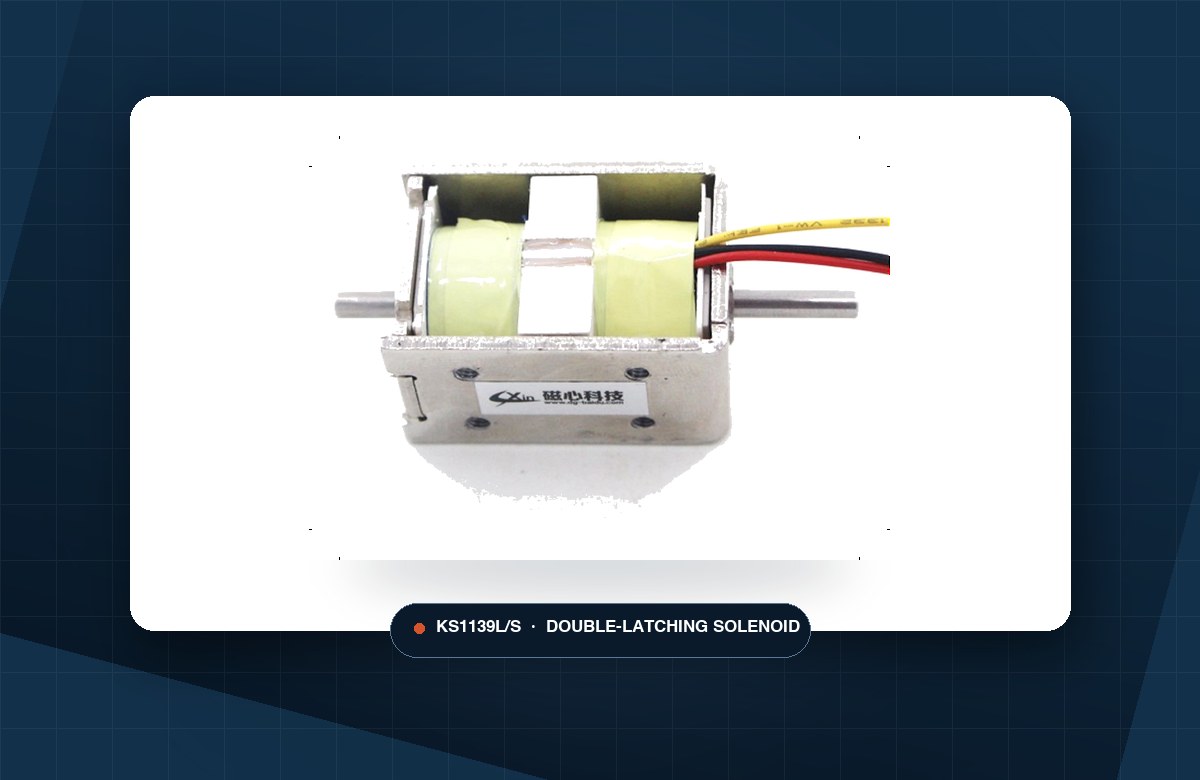
Holds position with zero holding current.

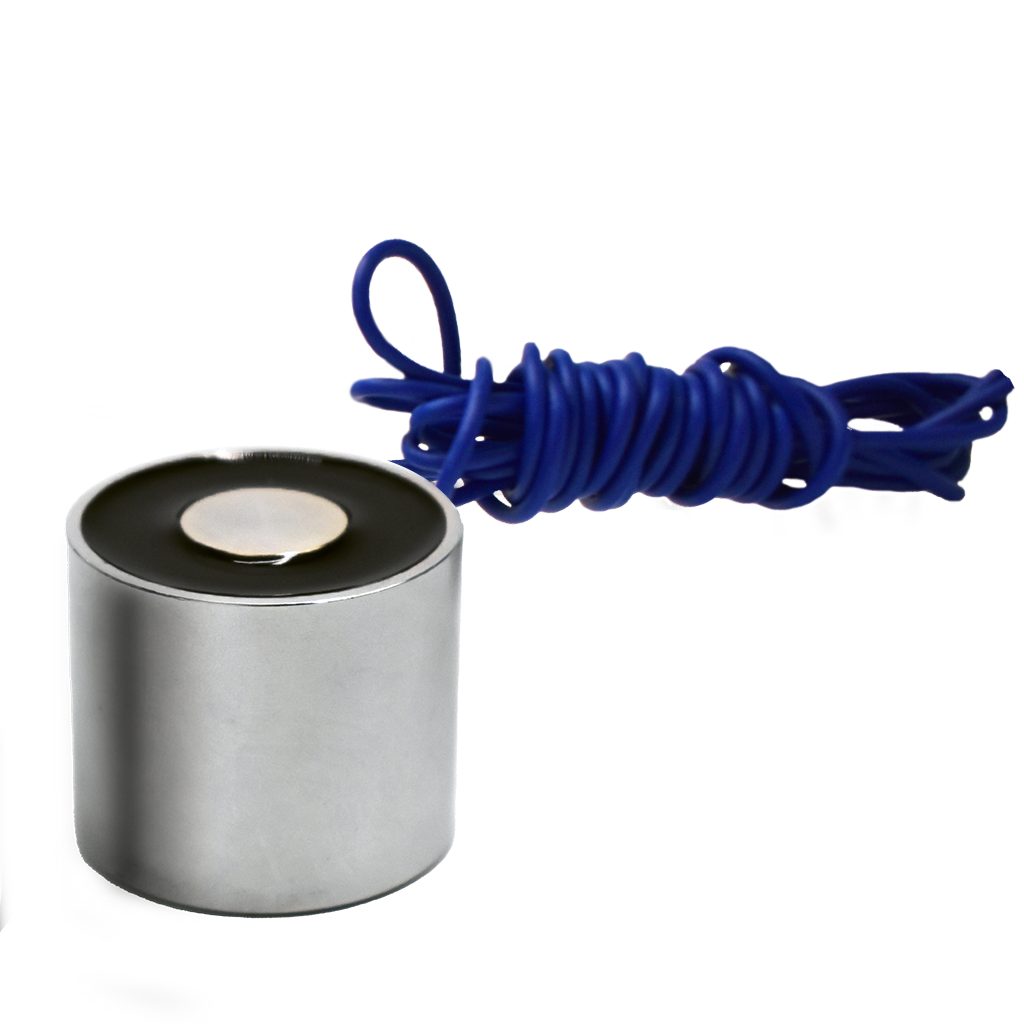
Long stroke and high force in a round frame.
Angular motion in a single pulse.

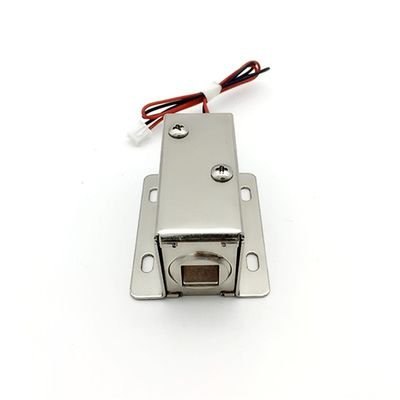
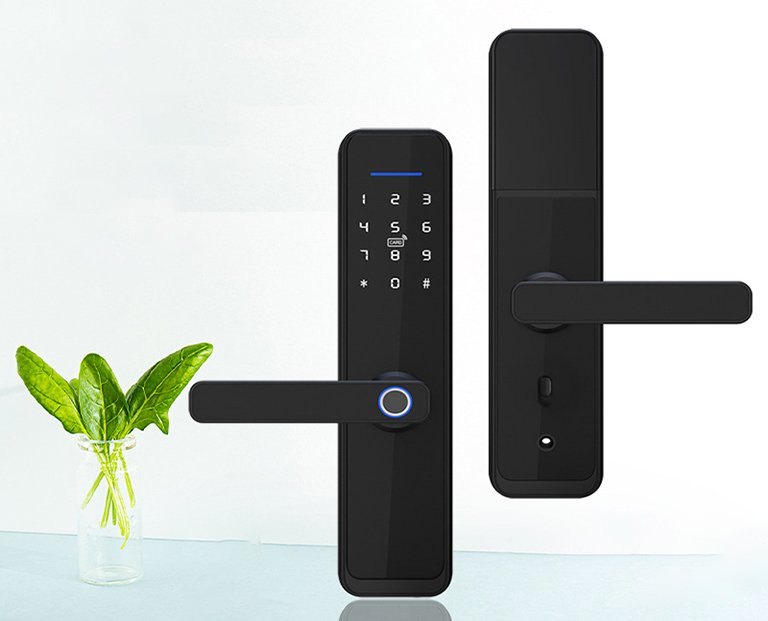
Complete locking assemblies for cabinets and lockers.
Miniature two- and three-way fluid control.
Solenoids fail in the field for reasons that have nothing to do with the datasheet — a duty cycle that was never calculated, a bolt throw that was 1 mm short, a battery budget that was estimated. These pages start from the constraint.

Battery-powered bolts that must release on a short pulse.

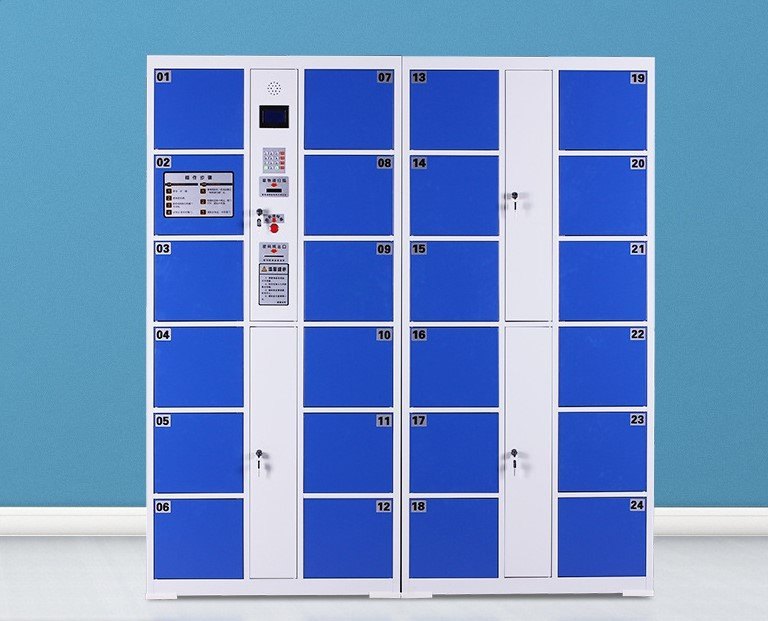
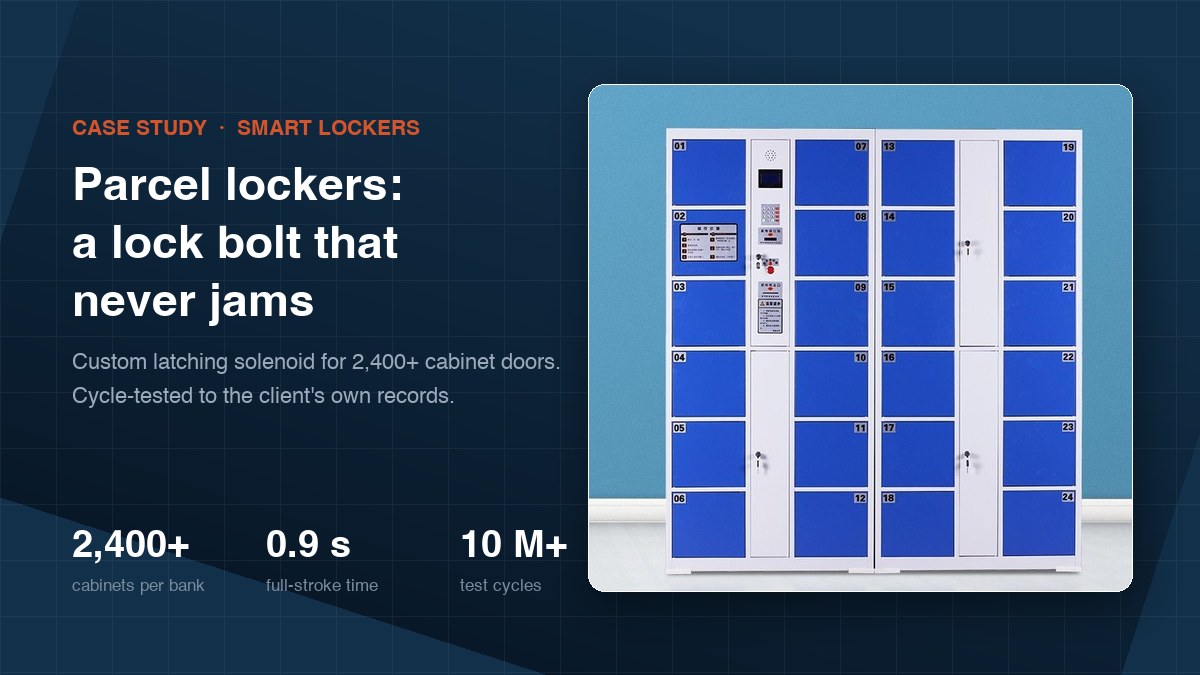
High-cycle locking and dispensing across dozens of doors per cabinet.

Quiet, low-cost actuation at very high volume.

Millions of cycles on a production line that cannot stop.

Vibration, temperature swing and a 12 V rail that sags on crank.

Compact, quiet actuation inside instruments and machines people trust.
Three further pages cover parking and access barriers, ticket gates, server rack and cabinet locks, feed dispensers, irrigation valves and drone payload release.
Five units that come up most often in enquiries. Full parameters, drawings and dimensional files are on each model page.
| Model | Type | Stroke / orifice | Force / pressure | Coil voltage |
|---|---|---|---|---|
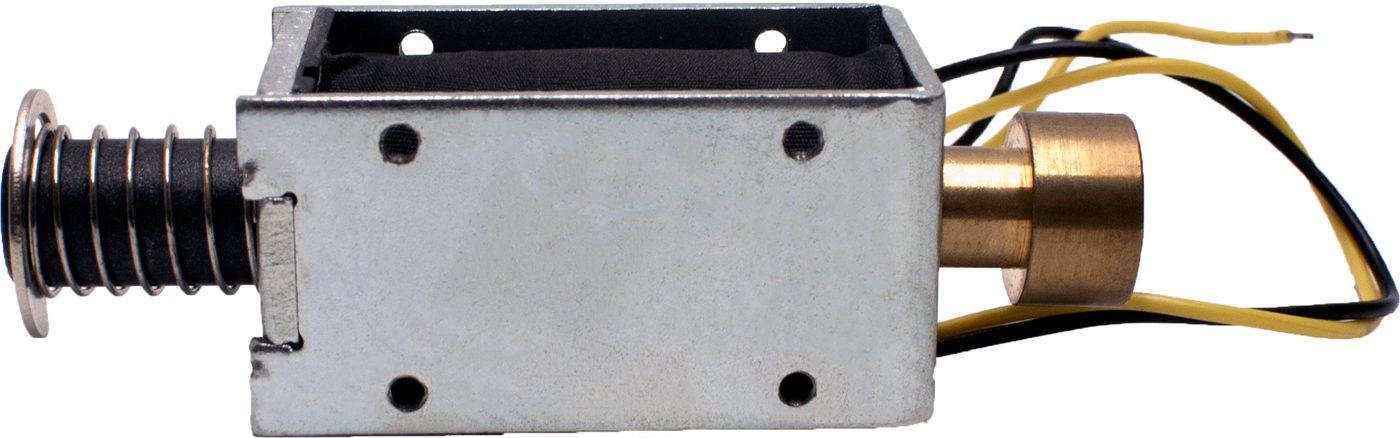
| U0835L-12C13 Rectangular Push-Pull Solenoid |
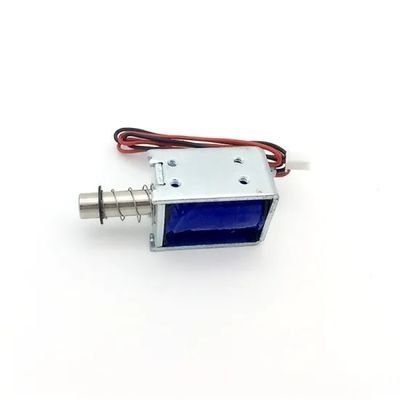
Push-pull, rectangular frame | up to 8 mm | up to 30 N | 12 V DC |
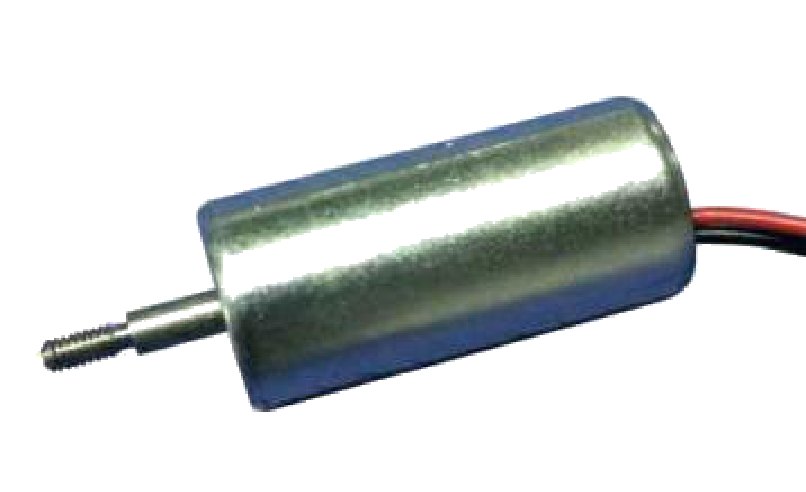
| T1540L/S 15 mm Tubular Solenoid, 40 mm Body |
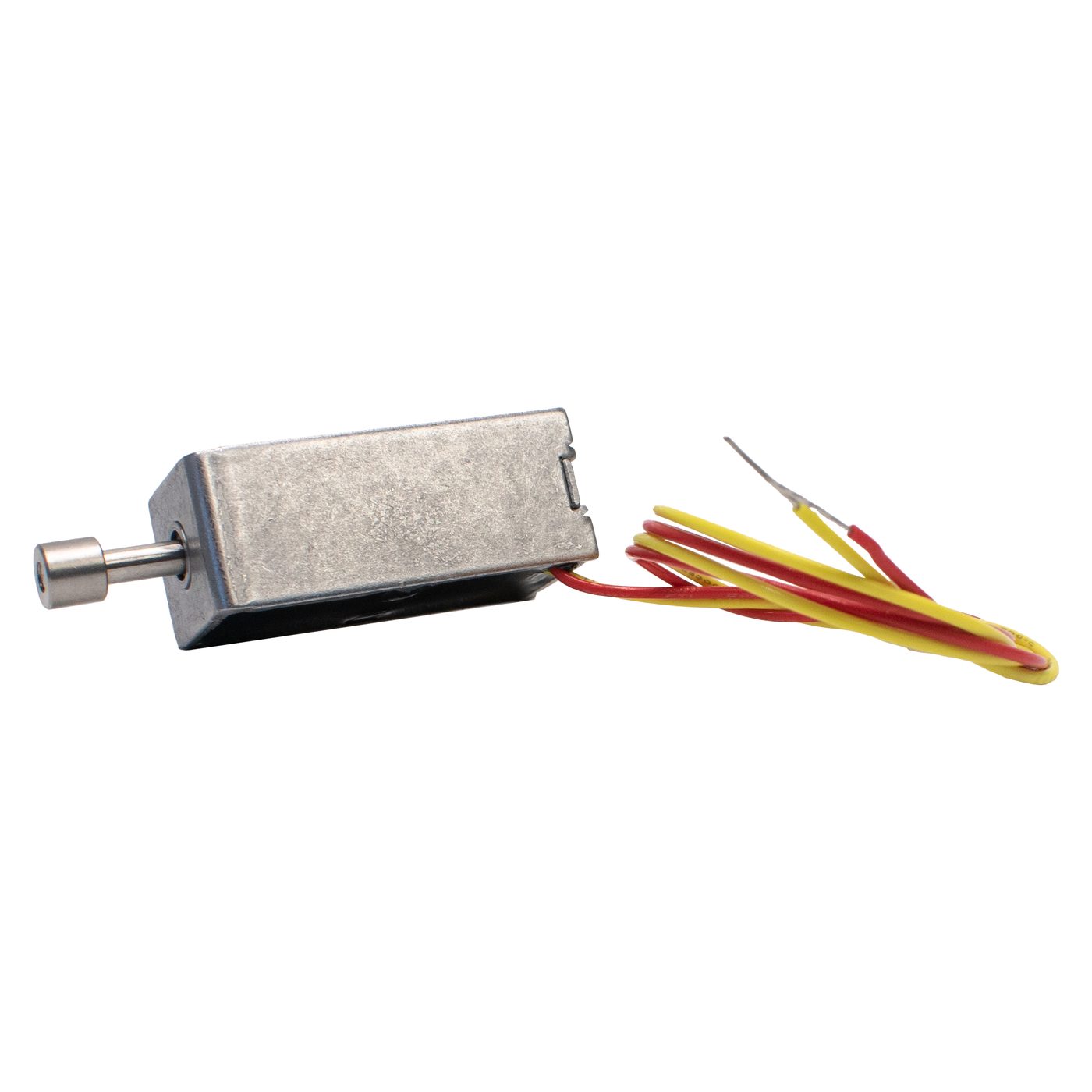
Tubular, push or pull | 0–10 mm (curve range) | — | — |
| T6490L/S 64 mm Tubular Solenoid, 90 mm Body |
Tubular, push or pull | 0–12 mm (curve range) | — | — |
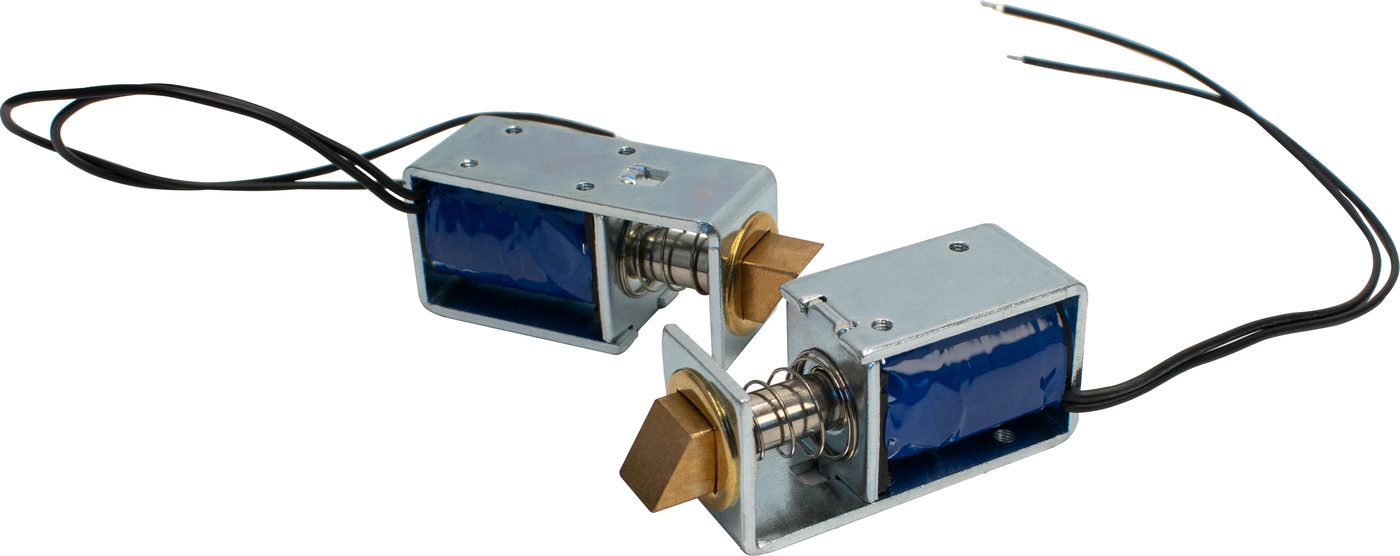
| X40180 Square Latching Solenoid |
Latching, square frame | 4 mm | up to 40 N | 6 / 12 V DC |
| QF2548 Gas & Liquid Release Solenoid Valve |
Normally closed, power-off exhaust | — | — | — |
Values are configuration reference for the standard build. Confirm the exact figure for your part number with engineering.
Most custom programmes run 6–10 weeks from a complete brief to a validated sample. The clock starts when the requirement is clear, not when the PO arrives.
We read the drawing or brief and come back with questions that matter — stroke, load, duty, envelope.
A proposed type, coil and interface, with a realistic unit price and lead time.
Typically 3–10 working days for a first functional sample.
Force-stroke, temperature rise, cycle and dielectric tests against your spec.
Released to the line with an agreed inspection plan and batch records.
Supplier evaluation usually comes down to two questions: can you make it repeatably, and can you prove it? Both answers live in equipment lists and test records, not in adjectives.
Coil winding, potting and final assembly under one roof.
Curves measured per lot, not copied from a catalogue.
Duty-cycle validation at the specified ambient.
Hipot and insulation resistance on 100% of units.
Client names are withheld unless permission was given. The constraints and measurements are the client's own.

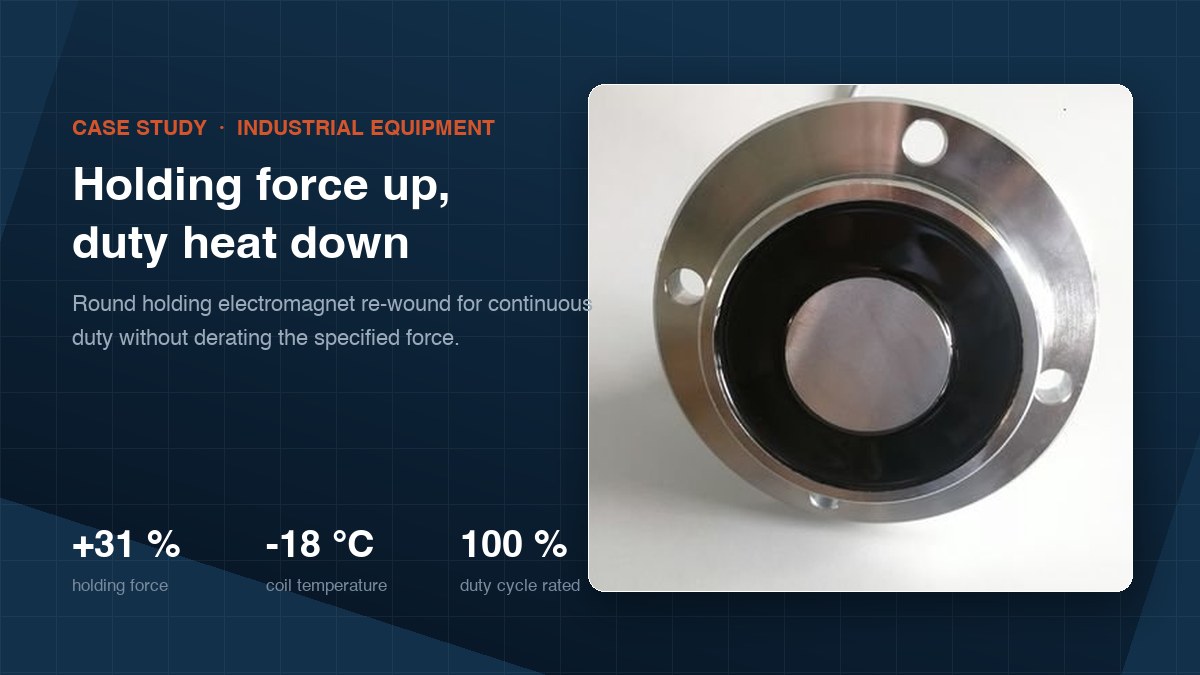
Continuous holding current of 180 mA flattened a 4 Ah battery in 19 days.

Off-the-shelf units exceeded the 50 dB(A) noise limit at the operator position.

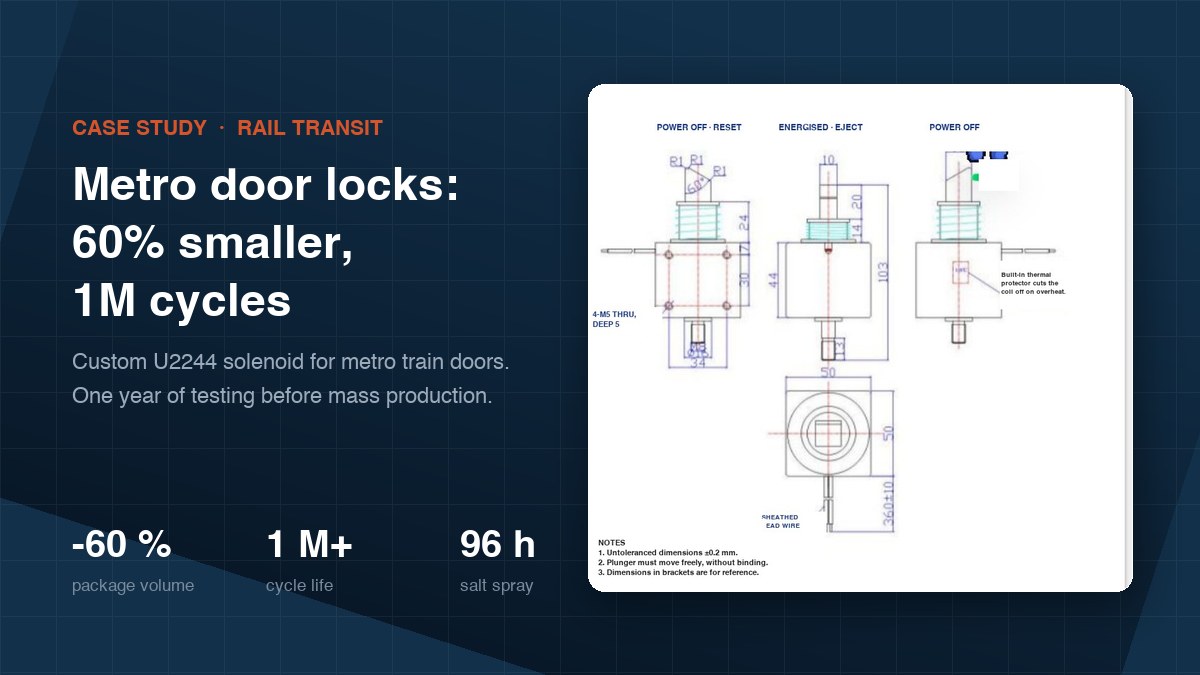
The conventional frame only fitted the door mechanism with far more volume than the customer's design space allowed, and the life and corrosion requirements sat above anything in the standard range.

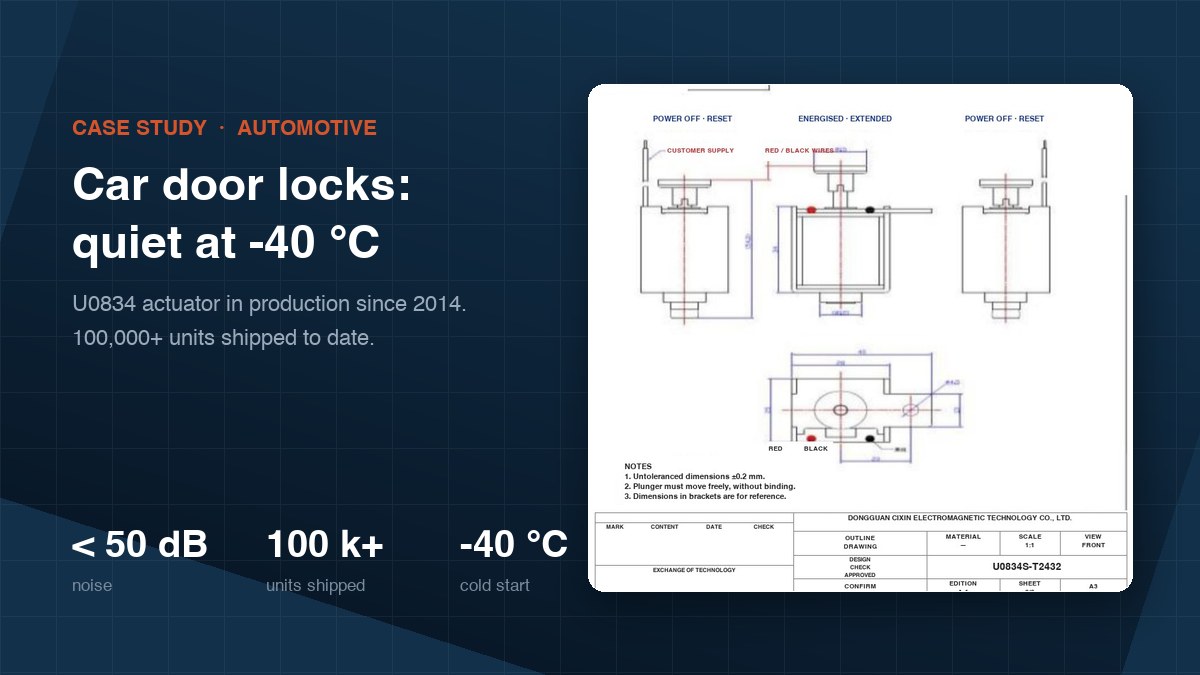
Standard units were too loud for cabin use, and the low-temperature requirement sat outside the catalogue range.

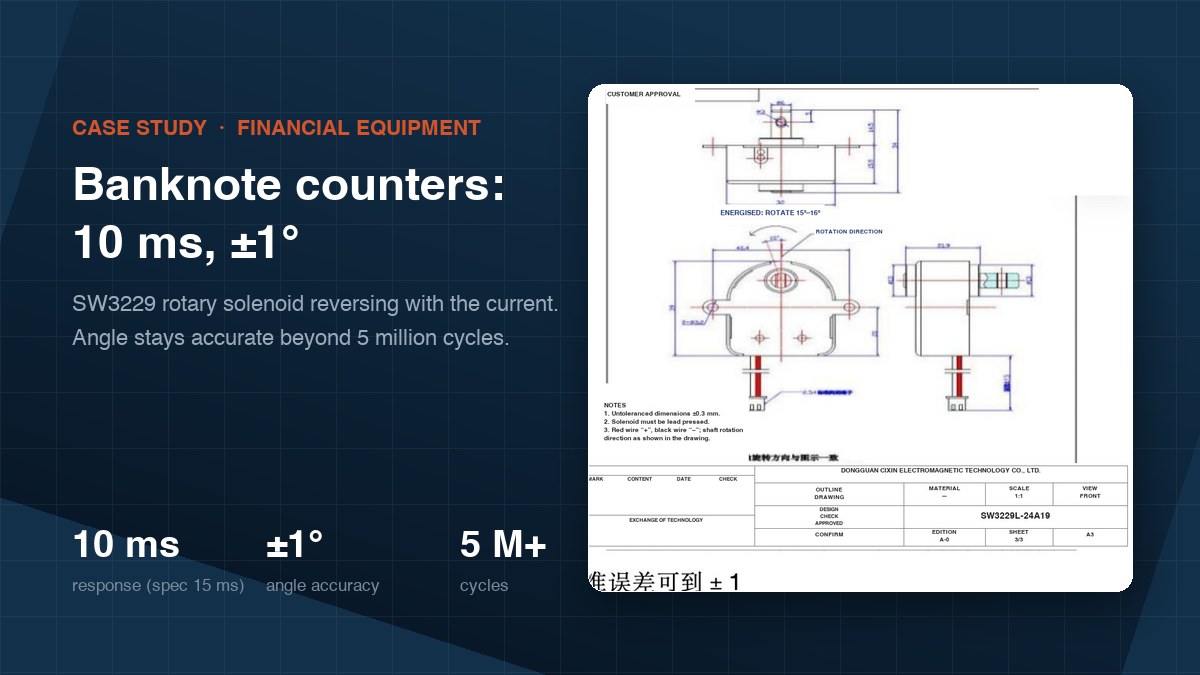
The counting mechanism needed direction reversal driven purely by current polarity, with angle accuracy and response speed beyond what the standard rotary range offered.
These are the questions that come up in almost every enquiry. If your situation is not covered, ask — it usually becomes the next article.
All articlesYou do not need a finished specification. Stroke, load, supply voltage and the space you have is enough to start a conversation.